Table Of Content

Some signs of traction alopecia include hair loss in patches where the hair was pulled and shorter strands of hair near the forehead. Anyone can have androgenetic alopecia (pattern baldness). These hair changes can make it hard to maintain how you want to look, especially if you're transgender or nonbinary (which means you don't identify as fully male or female). You may want to shift where hair grows (or doesn't) to reflect your affirmed gender. Pregnancy, and especially giving birth, can lead to hair loss. You're most likely to see hair loss about 3 months after giving birth.
Chronic health conditions
Being gentle with your hair while it’s experiencing change is important so as not to exacerbate any thinning. It goes without saying that excessive heat and chemical treatments aren’t a good idea, but try and opt for protective hairstyles too. “Opt for hairstyles that minimize tension on the hair follicles, such as loose braids, buns or ponytails,” advises Gaboardi.
You’re taking certain medications
Your doctor might be able to recommend a non-hormonal option that may help you keep more of your locks. You’re more likely to deal with this post-surgery symptom if your zinc levels are low, but it’s common to lose some locks after bariatric surgery. Your doctor may recommend a zinc and copper supplement to help halt your hair loss. Telogen effluvium occurs when large numbers of hair follicles push into the resting phase. This April marks Stress Awareness month in the US, a calendar moment designed to raise awareness of the pervasive and damaging nature of stress. Scalp rashes and harsh reactions or allergies to hair products and even the bleach in hair color can trigger hair loss in some people.
What is hair loss in women?
Other symptoms include fever, swelling in the feet and hands and around the eyes, chest pain, and anemia. If the fallout is occurring from external damage caused by styling, it will simply break, and you won’t see those club-shaped telogen bulbs at the ends. With ringworm, a fungus you contract by touching an infected person or animal, you’ll notice red patches on your scalp, which may be diffused, Dr. Jakubowicz says. A physical examination can determine which specific condition you have. Beyond the physical aspect, it can take a toll on a person emotionally—especially for women, according to a 2015 review of research. Because hair is so closely identified with femininity, it can impact your self-esteem, make you feel depressed, and get in the way of your relationships with other people.
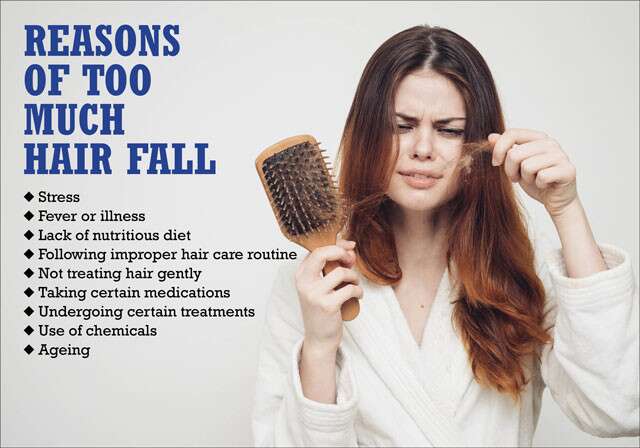
Here’s everything hair experts need you to know about the causes of hair loss. Baldness is often hereditary, and is activated by a shift in your hormones. Postpartum hormonal changes and stressors are more likely to cause hair to fall out. After giving birth, a drop in estrogen levels can cause hair to start excessively shedding. The stress and trauma of birth can also cause hair shedding. Postpartum hair loss is typically the most noticeable after four months, but hair often grows back to its usual thickness in a year.
Hormones
Androgenetic alopecia is also called female or male-pattern baldness. This is a common type of hair loss that causes hair to fall out in a well-defined pattern, often beginning above the temples. Men often experience thinning of the hair on the crown of their head, as well as a receding hairline, though some men will eventually go completely bald. Women often see their hair loss as a thinning of their part and don’t typically lose hair from their front hairline. The type and severity of hair loss you experience may determine the outcome (prognosis).
Vitamin D Deficiency
Women with telogen effluvium typically notice hair loss six weeks to three months after a stressful event. Your doc can diagnose this condition by looking for small “club-shaped” bulbs on the fallen hair’s roots. This means the hair has gone through a complete cycle of growth, suggesting that the cycle may have sped up due to stress. But if your follicles become damaged, the hair loss may be permanent. See your dermatologist if you notice this type of hair loss. The sooner you start treatment, the better the chances for hair regrowth.
Why is my hair falling out? Here's how to treat excessive hair shedding. - USA TODAY
Why is my hair falling out? Here's how to treat excessive hair shedding..
Posted: Wed, 29 Nov 2023 08:00:00 GMT [source]
Excess TSH usually indicates hypothyroidism, while abnormally low levels suggest hyperthyroidism. But when you don’t have the right amount, you may notice changes in bodily functions. When too little is pumped out, you are said to have hypothyroidism, or an underactive thyroid. If your body makes too much of the hormone, you’re said to have hyperthyroidism, or an overactive thyroid. It's most often temporary, but sometimes it can last for months or years. Your doctor will also look at other areas on your body like your eyebrows, lashes, underarms, pubic area, legs and arms to assess if there’s hair loss.
If a person notices they are losing more hair than usual, they may have an underlying condition. It is important to consult a doctor to learn what the possible cause and best treatment may be. A person should contact a doctor for a blood test to check whether they have a nutritional deficiency that could be causing their hair to fall out. Avoiding tight hairstyles will usually prevent further damage. Telogen effluvium is a condition in which the hair remains in the telogen phase of the cycle. This causes more hair than usual to fall out, sometimes in handfuls.
In some cases, an early diagnosis can increase chances of regrowing hair. Malnutrition is a lack of proper nutrition that can be caused by not eating enough, eating too much, or not getting the right balance of nutrients. A lack of access to food, dietary imbalances, eating disorders, or digestive conditions are some potential causes.
One of the most common disorders that dermatologists diagnose and treat, the medical term for hair loss is alopecia. A 2020 study tracked 79 women taking spironolactone daily (doses ranged from 25–200 mg) for a minimum of 6 months. Nearly two-thirds of participants experienced some kind of improvement after 1 year. Those who began the trial with more pronounced hair loss saw the most benefit from the medication.
But your doctor can check for underlying problems like thyroid disorders or nutrient deficiencies. But excessive shedding — known in medical terms as telogen effluvium — is often a sign that something’s up. No matter which term you use, it means that you’ve inherited genes that cause your hair follicles (what each hair grows out of) to shrink and eventually stop growing hair. Shrinking can begin as early as your teens, but it usually starts later in life. Typically, the most common types of hair loss are treated with topical or oral medications, which will likely be the first course of treatment. It’s important to keep in mind that hair growth is a complex process and multiple tests may be needed to understand what is causing your hair loss.
For the purposes of this article, we use “male” and “female” to refer to a person’s sex assigned at birth. Below are some frequently asked questions about hair loss. A doctor may recommend dietary changes and supplements to treat a nutritional deficiency. Sign up to our newsletter and get exclusive hair care tips and tricks from the experts at All Things Hair.
However, this can change during menopause (more on that later) and some women with strong family histories of hair thinning or balding may still experience this. There are several reasons why you might be losing your hair. According to Agbai, genetics, hormonal shifts, stress, underlying medical conditions, nutritional deficiencies, and scalp inflammation are notable factors. You can lose hair during menopause as your estrogen and progesterone levels drop.